 Jay
JayEvery shipper eventually asks the same question: Am I paying a fair rate?
Two quotes for the same route can differ by ₹8,000. Rates that made sense in March feel wrong in October. This post gives you the framework to answer that question yourself — what goes into a freight rate, what the cost floor is, and why rates shift.
What You’re Actually Paying For
A freight bill covers three things:
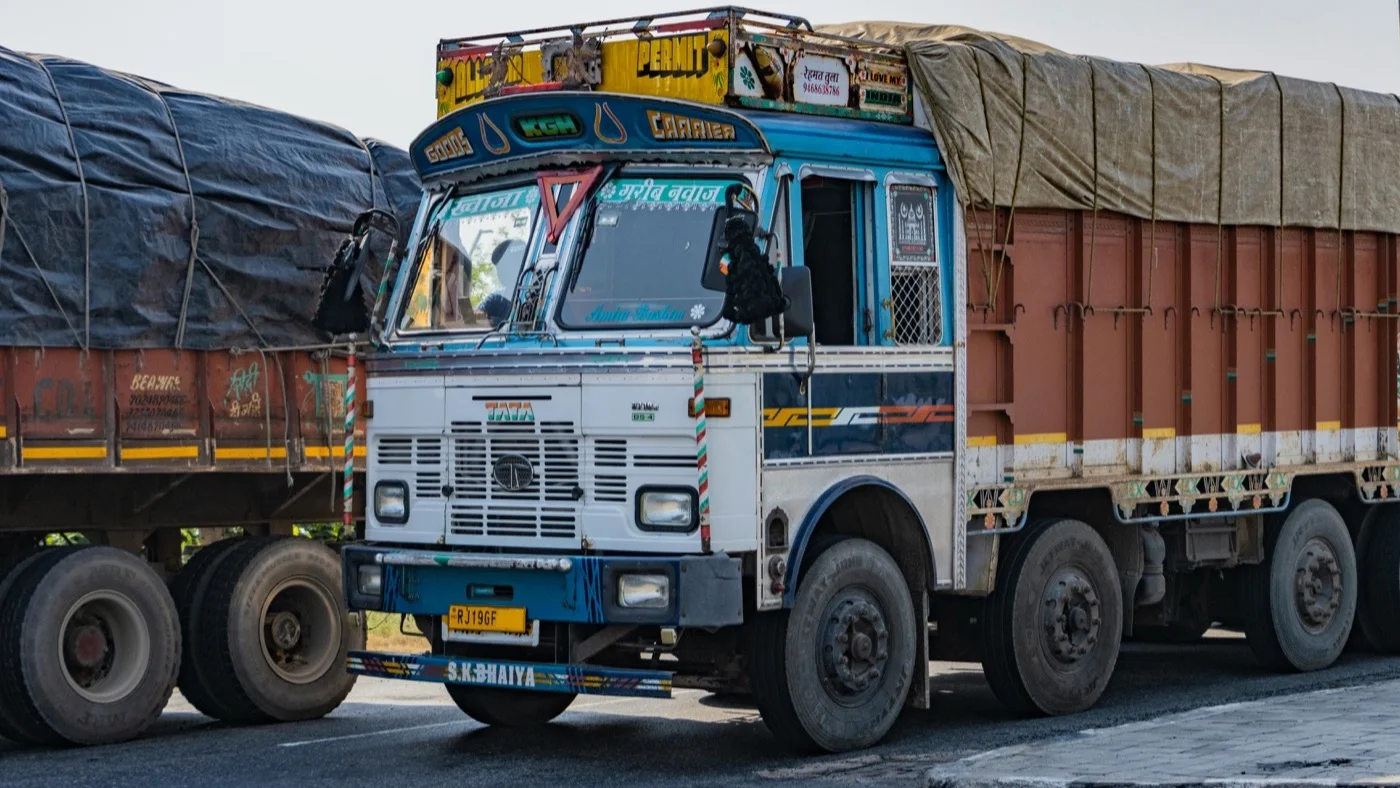
Fixed costs — what the truck owner pays monthly whether the truck moves or not. A financed 32ft MXL container (India’s most common highway truck) carries:
| Cost | Monthly |
|---|---|
| EMI (₹35L truck, 5-yr loan, 10%) | ₹55,000–65,000 |
| Driver + cleaner salary | ₹44,000–58,000 |
| Depreciation + insurance + permits | ₹30,000–32,000 |
| Total (financed) | ₹1,10,000–1,30,000/month |
These costs run on day the truck sits idle too. The operator spreads them across 4–6 trips per month on medium-haul routes. Short routes always cost more per km than long ones because there are fewer kilometres to spread these costs across. This is the single most important thing to understand about freight pricing.
Variable costs — what scales with the trip:
| Cost | Per km |
|---|---|
| Fuel (MXL, ~5 km/L, diesel ₹93/L) | ₹19–24 |
| Toll (16-tyre MXL) | ₹3–7 |
| Tyre wear + maintenance | ₹3.5–5.5 |
| Total variable | ₹26–37/km |
This is the hard floor. Quotes significantly below ₹26/km in variable costs alone mean the operator is either running toward a better return load or the rate will be renegotiated at loading.
Return load availability — the hidden multiplier. When return freight from the destination is abundant, operators can quote lower because they’ll earn on both legs. When a destination has scarce outbound freight, the operator prices in the deadhead return. Same 500 km route, same truck — but 20–40% different rates depending on which direction the freight flows.
Real Rates from FR8 Trip Data
Median rates from actual booked trips on the FR8 platform:
| Route | Distance | 32ft MXL | 32ft SXL |
|---|---|---|---|
| Chennai → Bangalore | 356 km | ₹20,000 | ₹20,000 |
| Chennai → Coimbatore | 504 km | ₹20,000 | ₹22,000 |
| Chennai → Raipur | 1,250 km | ₹30,000 | ₹27,500 |
| Chennai → Mumbai | 1,327 km | ₹30,000 | ₹20,000 |
| Chennai → Kolkata | 1,663 km | ₹22,000 | ₹20,000 |
For live rates on your route today, use the rate finder on FR8’s homepage.
The pattern that matters — per-km rate drops sharply as distance increases:
| Route | Distance | MXL rate | Per km |
|---|---|---|---|
| Chennai → Bangalore | 356 km | ₹20,000 | ₹56/km |
| Chennai → Coimbatore | 504 km | ₹20,000 | ₹40/km |
| Chennai → Raipur | 1,250 km | ₹30,000 | ₹24/km |
| Chennai → Kolkata | 1,663 km | ₹22,000 | ₹13/km |
The same truck costs ₹56/km on a 350 km trip and ₹13/km on a 1,600 km trip — because fixed costs get spread over far more kilometres on the longer haul.
Is This Rate Fair? A Quick Check
For Chennai → Bangalore (356 km, 32ft SXL) at the market rate of ₹20,000:
- Variable costs: fuel ₹6,600 + toll ₹800 + driver bata ₹3,000 + misc ₹1,000 = ₹11,400
- Fixed cost per trip (owned truck, 8 trips/month): ₹82,500 ÷ 8 = ₹10,300
- Cost floor: ₹21,700
At ₹20,000, the operator is at or just below cost floor — this is a tight-but-market rate. A broker quoting ₹14,000 for the same trip is either running toward a return load (and service will reflect it) or the rate climbs before loading.
Use this approach for any route: estimate fuel (distance ÷ mileage × ₹93), add toll and driver bata (~15% of trip cost), and you have the variable floor. Anything significantly below it has a reason.
Why Rates Change
Return load availability is the biggest swing. Routes with balanced two-way freight — Chennai–Bangalore, Mumbai–Pune, Delhi–Jaipur — stay competitive. Routes where goods flow one way (industrial towns that receive more than they ship) carry a deadhead premium. North-East routes are the extreme: operators to Guwahati almost always return empty and price rates 2–3× the per-km average.
Season follows three phases. September–January is peak — Navratri/Diwali demand tightens truck supply, expect rates 15–25% above base. February–June is normal, with brief spikes at March and June quarter-ends. July–August is lean — supply exceeds demand, the best window to negotiate annual contracts.
Road quality and tolls are non-negotiable cost inputs. Ghat sections (Kerala, Odisha routes) halve fuel efficiency — 5 km/L on highway drops to 2.5 km/L on ghat road. Toll on a 16-tyre MXL runs ₹4–7/km on major NHs; Delhi–Mumbai toll alone is ₹8,000–12,000 per trip. Always confirm whether a quote includes toll.
City entry and idle time add a hidden buffer to metro-city rates. A truck waiting 4–8 hours at a Mumbai or Bengaluru delivery point runs up driver bata and daily fixed costs without moving. Offering a confirmed loading/unloading time slot removes a cost the operator would otherwise price in.
GST on Freight
Under the GTA framework, most B2B freight runs at 5% GST under RCM — you pay it directly to the government. If you’re GST-registered, you claim it back as ITC and the net cost is zero. Shipments under ₹750 per consignee per day are exempt.
Rate Reference by Distance
| Distance | 19ft Open | 32ft SXL | 32ft MXL |
|---|---|---|---|
| 300–500 km | ₹12,000–22,000 | ₹18,000–25,000 | ₹18,000–25,000 |
| 500–800 km | ₹18,000–28,000 | ₹20,000–30,000 | ₹20,000–30,000 |
| 800–1,300 km | ₹20,000–32,000 | ₹22,000–35,000 | ₹25,000–40,000 |
| 1,300 km+ | ₹18,000–35,000 | ₹20,000–45,000 | ₹22,000–50,000 |
Ranges from real FR8 bookings. Actual rate depends on route, season, and day-of availability.
Five Ways to Pay Less
1. Match truck size to your load. A 32ft MXL at half capacity costs the same as full. For 5–8 tonnes, a 19ft open or 20ft container saves 30–40%.
2. Offer return loads. Help your transporter fill the back leg — even referring another shipper at the destination — and they can reduce your outward rate.
3. Book in lean season. July–August is the negotiating window. Lock in annual rates before September demand hits.
4. Commit to a loading time slot. A confirmed dock slot removes the idle-time buffer operators build into metro-city rates.
5. Know the floor. Calculate the variable cost floor for your route before negotiating. Quotes at or below it have a catch — in service quality, placement delays, or an on-the-day renegotiation.
Loading and Unloading Charges (FAQs)
What are truck loading charges in India?
Loading charges cover the labour and equipment used to get goods onto the truck — gang labour, and sometimes a forklift or crane for palletised or heavy cargo. For a full truckload they typically run ₹500–1,500 per end, scaling with truck size and whether mechanised handling is involved. They are not part of the per-km rate, so always confirm whether a quote includes them. On FR8, loading charges where applicable are disclosed upfront as part of the all-in rate, so there are no surprises at the dock.
What are unloading charges, and who pays them?
Unloading charges are the mirror-image cost at the delivery end, usually ₹500–1,500 depending on the consignment. On many intercity routes the freight rate you pay is inclusive of both loading and unloading; on others the buyer handles unloading at the destination. The same rule as loading applies — confirm up front who bears the cost. FR8’s transparent, all-in truck rates list these charges explicitly before you book, so you know the exact figure rather than discovering a dock-side extra.
Freight rates aren’t arbitrary. They reflect a real cost structure with a calculable floor. Understanding it tells you what’s fair, what’s cheap for a reason, and where you have room to push.
Check current market rates for your route at fr8.in.